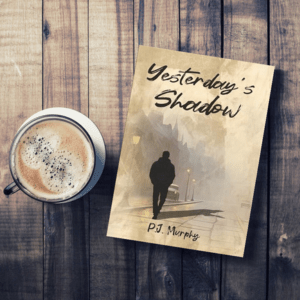
It has been two years since my last confession – that confession being the publication of my third novel, Yesterday’s Shadow. It’s a work of autofiction, written at a time when I didn’t know that genre was defined with its own word. Its genesis, for better or worse, was in a slavish adherence to that old adage, “write what you know”.
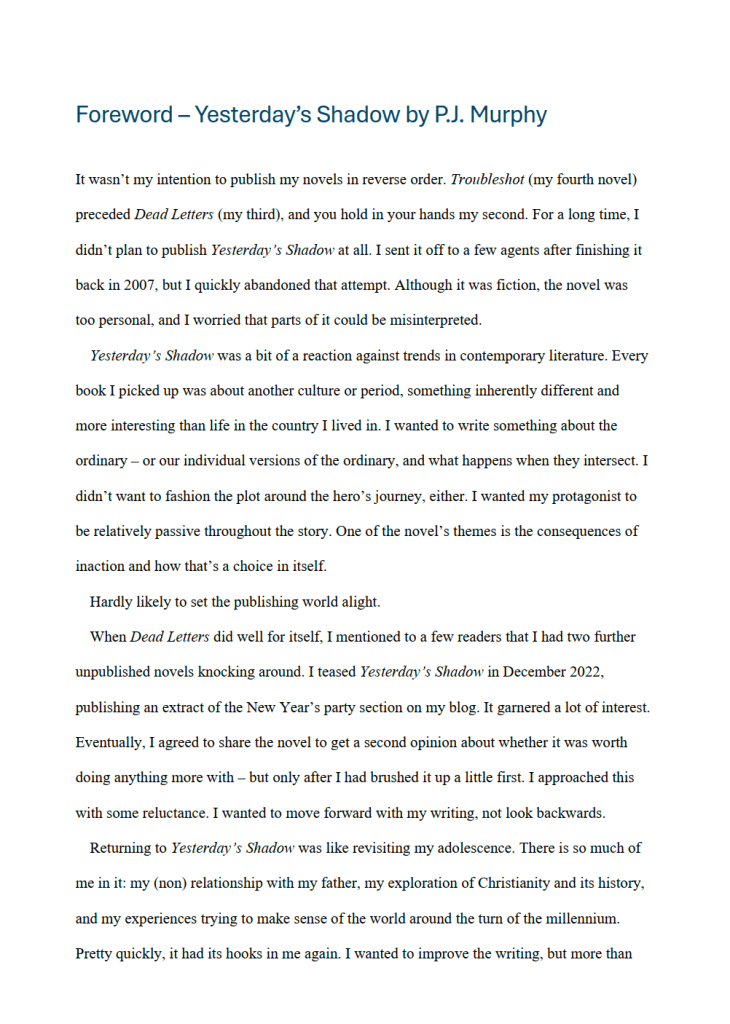
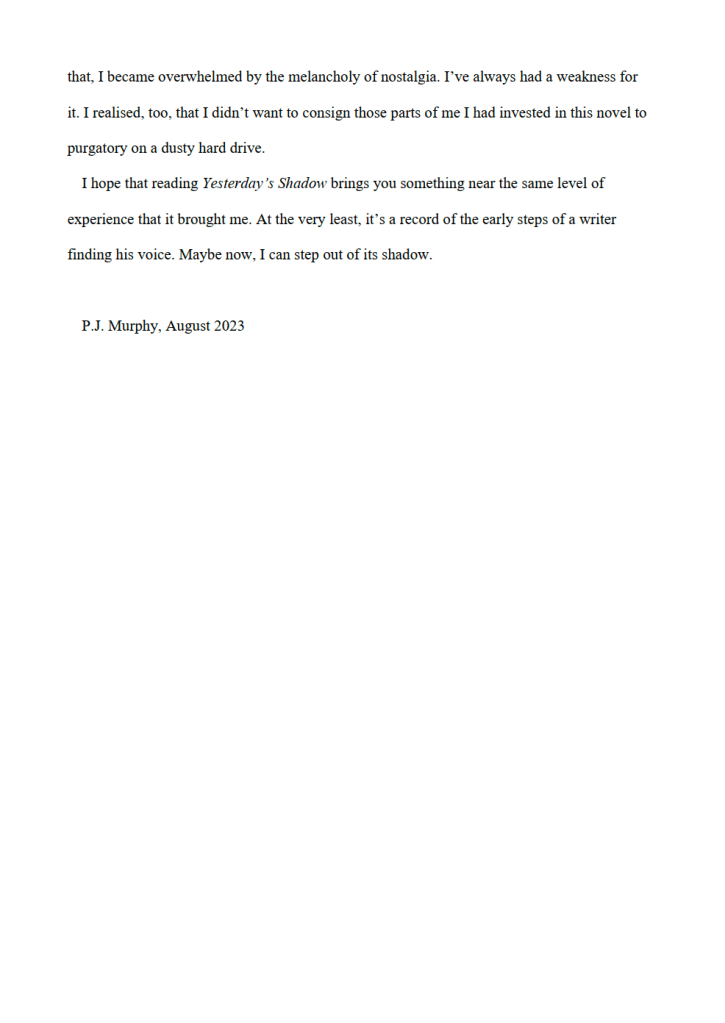
But what does “write what you know” mean in practice? I’ll get to that in a second, but firstly, just a clarification. Although Yesterday’s Shadow was my third published novel, I actually wrote it well before the other two, right after finishing a dystopian murder mystery (I was definitely not writing what I knew there), which to date remains on a dusty hard drive. As such, it’s a work of a young author finding his voice and trying to follow all the bits of advice we writers have thrust at us. You can read more about its genesis in this Foreword to the novel I wrote back in 2023.
Anyway, for me, “write what you know” comes down to three key things:
Don’t be Nicolas Cage
It’s rare that you’ll hear me say such a thing, as I think Nicolas Cage is cool. I’m here referring to his character in the Charlie Kaufman classic, Adaptation (2002). Here’s the clip I’m thinking of, in which he spars (unsuccessfully) with Brian Cox’s depiction of Robert McKee.
This scene, and the film as a whole, had a big impact on me as a young writer. It came out at exactly the time I was planning Yesterday’s Shadow. And yes, before you say it, I would probably have been better off taking a Robert McKee course, but this way was funnier and cheaper. Anyway, what I took from this clip is that writing what you know isn’t about putting pen to paper to share your daily routine with everyone. Good storytelling requires a break from the norm. Characters need to be thrown into situations that are unusual for them. This doesn’t necessarily mean that they need to get involved in car chases and gunfights, but there needs to be adversity, there needs to be conflict.
Another thing: this break from the norm shouldn’t come after several chapters outlining your protagonist’s daily life. Maybe authors could have got away with that a few decades ago, but with so many books on the market, you need to grab readers from the beginning. That’s why I started Yesterday’s Shadow with a domestic fight, which upended the world of our protagonist. Your characters’ reaction to the unusual can speak volumes about how they lead their normal lives.
Find the Emotional Heart
One common misinterpretation of “write what you know” is that you have to set your novel in “real” life. I don’t think that’s the case at all – otherwise, all fiction would be set in a contemporary environment. I think the best interpretation is that readers need to be able to connect with something in your novel. It needs to be real for them.
For me, the best way to do this is to make your characters believable and have readers engage with their emotional struggle. They may live in an alternate world or alien culture, but most human needs and desires are the same. Find out what drives your characters, and you’ll normally have something readers can recognise and get invested in.
Your characters don’t have to be real people
One of the questions I’m frequently asked as an author is who my characters are based on. Indeed, people sometimes go out of their way to be nice to me, for fear that I would otherwise exact retribution in literary form with my next novel. (Mwahahahaha!!)
I don’t base my characters on specific people, but I do incorporate traits from people I know, have met, or have imagined from snippets of conversations overheard. Thinking back to my audiobook journey, I learned that narrators sometimes picture a certain actor in their head as an aide-memoir for when they’re voicing their lines. You don’t have to go that far, but it can definitely help to have a firm picture of your characters as you’re writing them. If you can’t root your characters in real experience, how can your reader connect with them?
By all means, exaggerate characteristics. Real people are, generally, pretty boring. I wouldn’t want to read a whole novel about me, for example! But make sure you incorporate those human characteristics you recognise in people you know. That will give them the grounding in reality readers need to engage emotionally.
I’d like to finish with a few words about whether “write what you know” has to be personal truth. To that, I say ‘no’, although it does have to be true. By that I mean that, like it or not, the process of writing reveals many things about an author, some intended, and some not. So, whether you like it or not, you’re revealing an element of personal truth, even if you’re not writing a confessional novel. Given this, you need to be true to yourself in your writing; otherwise, it will be jarring.
Since Yesterday’s Shadow, my work has become more layered, its meaning hidden in artifice and humour. Is this a reflection on how we grow up, not so much abandoning our younger selves, but concealing them behind the parts of ourselves we want to show to others? I’m not saying we all become actors in our own lives, but certainly some aspects of ourselves become less raw. For me, Yesterday’s Shadow is a snapshot of that younger, rawer self. Perhaps it’s the truest thing I’ve written.
Yesterday’s Shadow is on sale on Kindle at the discounted price of £/$0.99 from 17th to 24th February. Check it out here.
 P.J. Murphy's Writer Site
Leave a comment